A Tale of Two Parks
by Ryan Quan, March 3, 2015
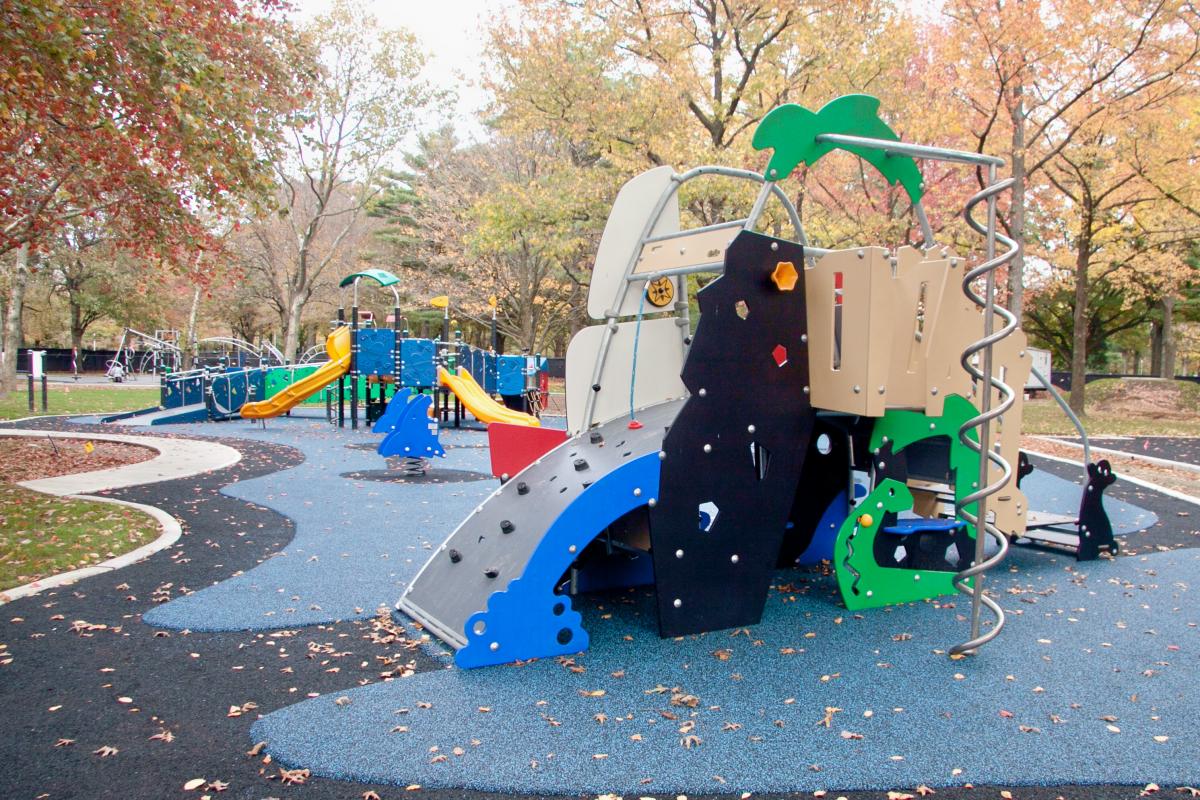
If you have never found yourself wishing to be young again, New York City will certainly change that. With access to over 1200 recreational play areas chock-full of interactive equipment, children in the Big Apple have it made.
But is playtime equal for every kid in New York City?
In a recent press conference, Mayor de Blasio raised concerns over the apparent quality gap between New York's premiere parks and the rest of the city's green spaces. His interest stems primarily from the disparate financial mechanisms that currently support park upkeep. Wealthier districts are often able to shuttle millions of dollars in charitable donations to private conservancies that support park juggernauts such as Central Park and Bryant Park. Meanwhile, less wealthier districts are unable to raise funds from residents of more modest means, which forces neighborhood parks to rely primarily on public money.
The result: a tale of two cities in which the poorer parks are ridden with broken benches, cracked sidewalks, and rusty equipment.
While private conservancies do not explicitly break any laws, their existence imparts injustices that reverberate throughout the parks system. Private conservancies, not too unlike private schools, are embodiments of resource and opportunity hoarding within the upper echelons of New York City's social class system. High-income individuals benefiting from private donations are able to detach themselves from the shared green space and accumulate substantial park resources for themselves. This situation dampens the political will of influential constituents wanting to expand the Parks Department's budget, resulting in shrinking park resources for the rest of the population. Today, New York City dedicates just 0.4 percent of its budget to parks, a tiny fraction considering trends of increasing park usage.
Okay, so New York City has a two-tiered park system - why does this even matter? As citizens of a capitalist-based system, we accept many inequalities in our daily lives. However, we do not necessarily consider all of these inequalities to be unjust in and of itself. What makes parks inequity a matter of social injustice?
First, in line with Marx's theory of moral degradation, the accumulation of wealth in parks with private conservancies is resulting in the accumulation of misery and ignorance in parks without such funding mechanisms. While people are allowed to spend earned income in whichever way they please, the problem begins when the results of these transactions stratify the population into the haves and the have-nots. Wealthier neighborhoods are able to build extravagant play areas, complete with spinning water wheels, climbing walls, and giant building blocks. On the other hand, parks relying solely on public funds are unable to afford such luxuries and are often struggling to simply maintain upkeep. Allowing such a hierarchy to infiltrate a public good communicates a rather degrading message to the people receiving the shorter end of the stick. Such a system cannot be morally permissible.
Second, a two-tiered parks system may exacerbate health inequalities between those of high and low socioeconomic status (SES). For example, playgrounds in less wealthier neighborhoods are often poorly maintained due to a lack of funding, which may put children in these neighborhoods at greater risk for acute injury. Moreover, communities with less park acreage overall are deprived of equal opportunities for physical activity and social integration, which may put individuals in these communities at greater risk for chronic health problems, such as obesity and depression. As explained by the theory of fundamental causes, SES "embodies an array of resources, such as money, prestige, power, and beneficial social connections that protect health." Since a two-tiered parks system would create a resource imbalance and increase the vulnerability of low SES populations to adverse health outcomes, we consider this arrangement to be unjust.
Third, the disparity in New York City's parks system represents a failure to secure the full set of capabilities required for dignified life to all people, particularly with respect to children in poorer neighborhoods who are entitled to "full human functionings" like anyone else. Parks are important settings for promoting community integration and physical activity, particularly in a mega-urban environment that has little communal space to begin with. Children goofing off on the playground, parents bonding with each other as they look nervously on, elderly folks playing chess near the benches - these interactions foster attachments that are essential to human well-being. Moreover, the ability to laugh, play, and enjoy recreational activities has been described as a central component to a life with dignity. As such, a society that allows a two-tiered park system to persist is shortchanging a fundamental entitlement to a vast number of its citizens. And that is a failure of justice.
So, is playtime equal for every kid in New York City? No, far from it.